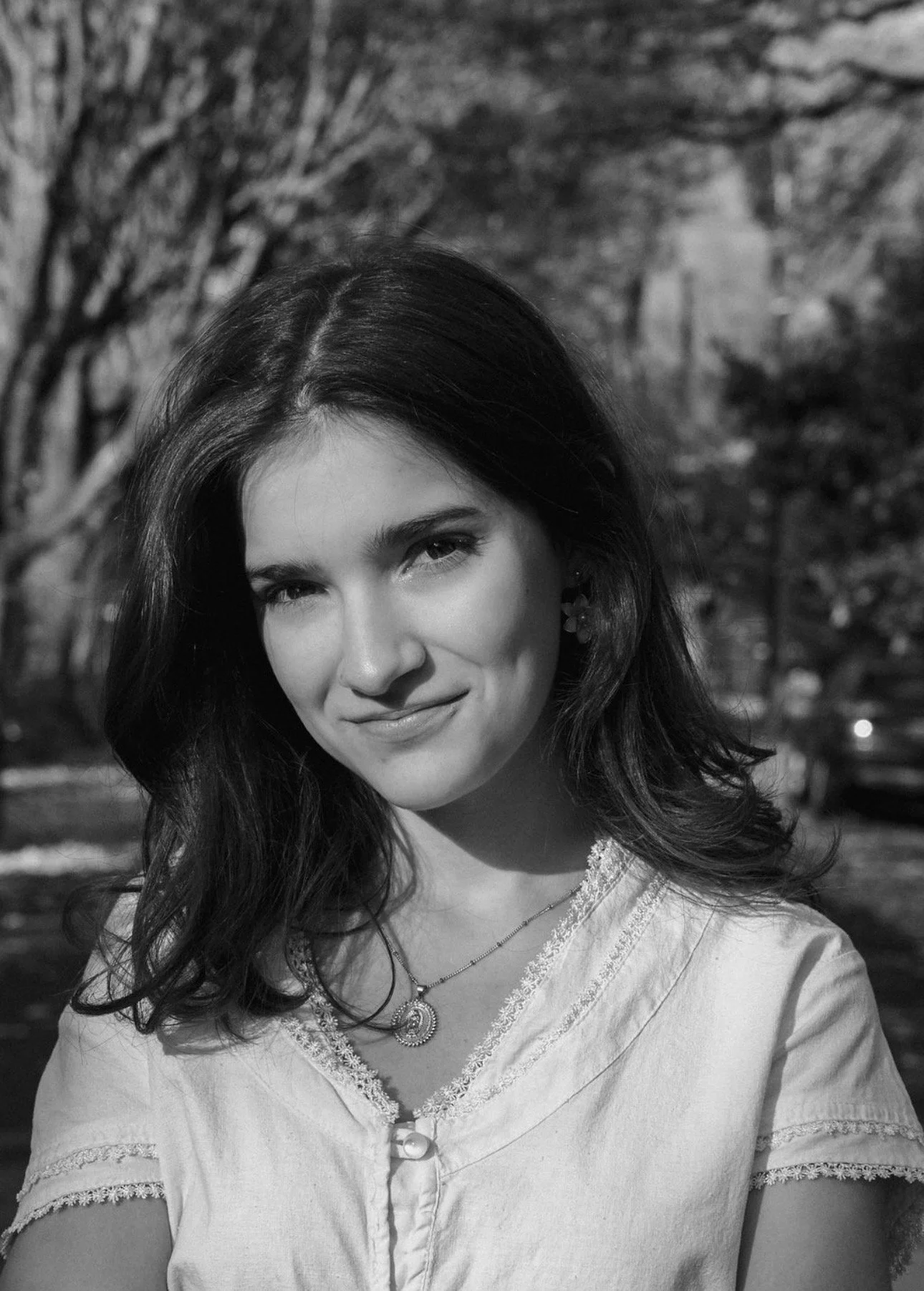
Lael Kill
What is your first memory of Trinity?
My first memory of Trinity was when I came to the Open House in 2019. As a homeschooler, I felt reluctant to come to Trinity, but I remember being surprised that people my age (11 at the time) were singing with 17 and 18-year-olds – and they sounded good! I was also introduced to Mrs. Mbona, and thought she was the real-life Ms. Frizzle. I only really came to love the school once I was in it. The thing that truly charmed me into loving Trinity as much as I do now was experiencing the values of the school put into practice by teachers who never made me feel as stupid as certain textbooks and curriculums did when I was homeschooled.
What classes have you particularly enjoyed? Why?
Humane Letters 10 was the first class where I really was able to see how history and narrative stories entwined together to show the truth about a time period. Reading A Tale of Two Cities connected me with the emotion and heart of the people who lived at the time of the French Revolution in a way our lectures and discussions hadn’t quite. I love history because it is about human connection and legacy and not just facts.
What do you think makes Trinity Academy distinctive?
Its small size, because it makes our community so tight-knit. The teachers are considerate and are genuinely some of the most fascinating people to talk to, and other students go out of their way to make other people smile. It is actually plausible to know everyone's name, and you are given the opportunities to interact with people from every grade. It’s unique to see older students naturally mentoring kids years younger than them.
Do you have a favorite Trinity Academy tradition?
I really enjoy morning prayer. When I was in my early years at Trinity, I loathed it because I had to stand so long and would frequently zone out. As I have gotten older, I have come to appreciate it a lot more because it is not only a way that teachers (and seniors at the end of the year) can mentor students in faith and share their knowledge, but it also creates familiarity between students and teachers. Before I even took a class with a teacher, I would know at least a little about them from hearing about their life at morning prayer. It makes the teachers not daunting authority figures, but just ordinary people with lives you can relate to, people just like you who just know a little (or a lot) more.
What is one class or subject you would not have taken on your own?
I have always been a pretty shy person, and would never have chosen to take Drama. It was really hard for me in junior year to go onstage, recite lines from Shakespeare while pretending to be an entirely different person, and hide who I was. It came as a surprise to me that in my senior play, I was cast in a big part. Maybe because I could relate to my character more, I got better at projection, facial expressions, and at truly acting! I actually think if I had been cast as a smaller part, I would have faded to the background like I did before. The class taught me that really all you need to make progress is the opportunity, and if you're given a responsibility, you can rise to the occasion.
What extracurriculars did you participate in? What have those experiences added to your life?
I have been in Trinitones since eighth grade. It is a joy to sing with so many lovely people. Trinitones has really taught me to appreciate the feelings different choral music can evoke and has also increased my confidence in singing over the years.
What was your favorite book you read in HL?
My Ántonia by Willa Cather has always been my favorite. It is one of the few books I have found that I really relate to in its description of friendship. It is also just one of the most beautifully written books we read at Trinity, with wonderful descriptions of landscapes and of people's personalities.
What advice would you give to an incoming student (one very much like yourself) about how to get the most out of Trinity?
Enjoy the process of learning. If you are always thinking about the next deadline and how to get the best grade, you will procrastinate, and you will cry. The best thing I learned how to do at Trinity is to act in the ways you would if you were enthusiastically interested in a topic, because then you actually do become interested in it.
What’s next for you? What do you hope it will be like?
Next year I am attending the University of St Andrew's in Scotland, studying medieval history and archeology.